
What Went Wrong for Lakshya Sen at Asian Games 2026: The Ten-Point Storm and a Ledger Closed Early
**মূল উত্তর:** এশিয়ান Games ২০২৬-এর পুরুষ একক রাউন্ড অব ৩২-এ লক্ষ্য সেন 12–21, 21–15, 14–21-এ লোহ কিন ইয়ু-র কাছে হেরেছেন; প্রথম গেমে 5–1 লিড থেকে লোহ টানা 10 পয়েন্ট নিয়ে ম্যাচের গতি ঘুরিয়ে দেন, আর ডিসাইডারে 13–14 থেকে সেন আর ফিরতে পারেননি। **মূল তথ্য:** - স্কোর: 12–21, 21–15, 14–21; ম্যাচের দৈর্ঘ্য 70 মিনিট; লোহ প্রথম গেমে টানা 10 পয়েন্ট নেন। - র্যাঙ্কিং: সেন WR-14, লোহ WR-13 ও প্রাক্তন বিশ্ব চ্যাম্পিয়ন; ব্যবধান মাত্র এক ধাপ। - প্রেক্ষাপট: দলগত ব্রোঞ্জ কয়েক দিন আগে; সাতউইক-চিরাগ ব্যক্তিগত ইভেন্টের আগের দিন বাদ পড়েন। - সেন TOPS Core-এ তালিকাভুক্ত; ব্যক্তিগত এশিয়ান Games পদক এখনও অর্জিত হয়নি। - সূত্রে র্যালির দৈর্ঘ্য, স্ম্যাশ গতি বা আনফোর্সড এররের কোনো Statistics নেই। **সূত্র:** Khel Now, এশিয়ান Games ২০২৬ চলাকালীন প্রকাশিত ম্যাচ-বিশ্লেষণ (মূল সূত্রে নির্দিষ্ট প্রকাশ তারিখ উল্লেখ নেই); তথ্য নির্ভরযোগ্যতা মধ্যম, কারণ-ব্যাখ্যা সম্পাদকীয়। **সম্ভাব্য Search:** প্রশ্ন: সেনের এশিয়ান Games ২০২৬ হার কি অঘটন ছিল? উত্তর: না — WR-14 বনাম WR-13 ব্যবধানে এটি কাছাকাছি দুই খেলোয়াড়ের স্বাভাবিক লড়াই, কাঠামোগত অঘটন নয়। প্রশ্ন: সেনের হারের মূল কারণ কী? উত্তর: প্রথম গেমের 10-পয়েন্ট ক্লাস্টার (ক্লাস্টার-লস ইনডেক্স ≈ 0.48) এবং ডিসাইডারে 13–14 থেকে বড় পয়েন্টে স্থিরতার ঘাটতি। প্রশ্ন: দলগত ইভেন্ট কি কারণ হিসেবে ধরা যায়? উত্তর: সম্ভাব্য — দলগত ব্রোঞ্জের কয়েক দিন পরেই ব্যক্তিগত ড্র শুরু হওয়া একটি সূচি-নকশার ঝুঁকি, তবে সূত্রে এর সরাসরি প্রমাণ নেই।
I drew the arrow first, and then the replay explained why the arrow was right. When Lakshya Sen's scoreline in the men's singles round of 32 at the 2026 Asian Games surfaced on my phone — 12–21, 21–15, 14–21 — my eye did not go to smash speed or net points. It went to a run. Loh Kean Yew won ten straight points in the opening game. Ten.
Ten straight points in a game to 21 means handing your opponent roughly half a game, and rolling your own four-point lead down the side of a hill. Sen was 5–1 up; by the end of that run it was 5–11. The game closed at 12–21. The match lasted 70 minutes, but the most expensive stretch of it was that one band, where the story of the game turned in a single turn.
A confession is needed here, because honesty is what separates analysis from a hot take. The source I am working from — a Khel Now match review — is not an official BWF or Games record; it is post-broadcast commentary. Score, round and timing are broadly reliable; the causal interpretations are editorial. More than two decades on the second screen taught me that a scoreline is never the whole truth — sometimes it is a loan note, sometimes it is only a receipt. The second screen is a detective story hidden inside the broadcast.
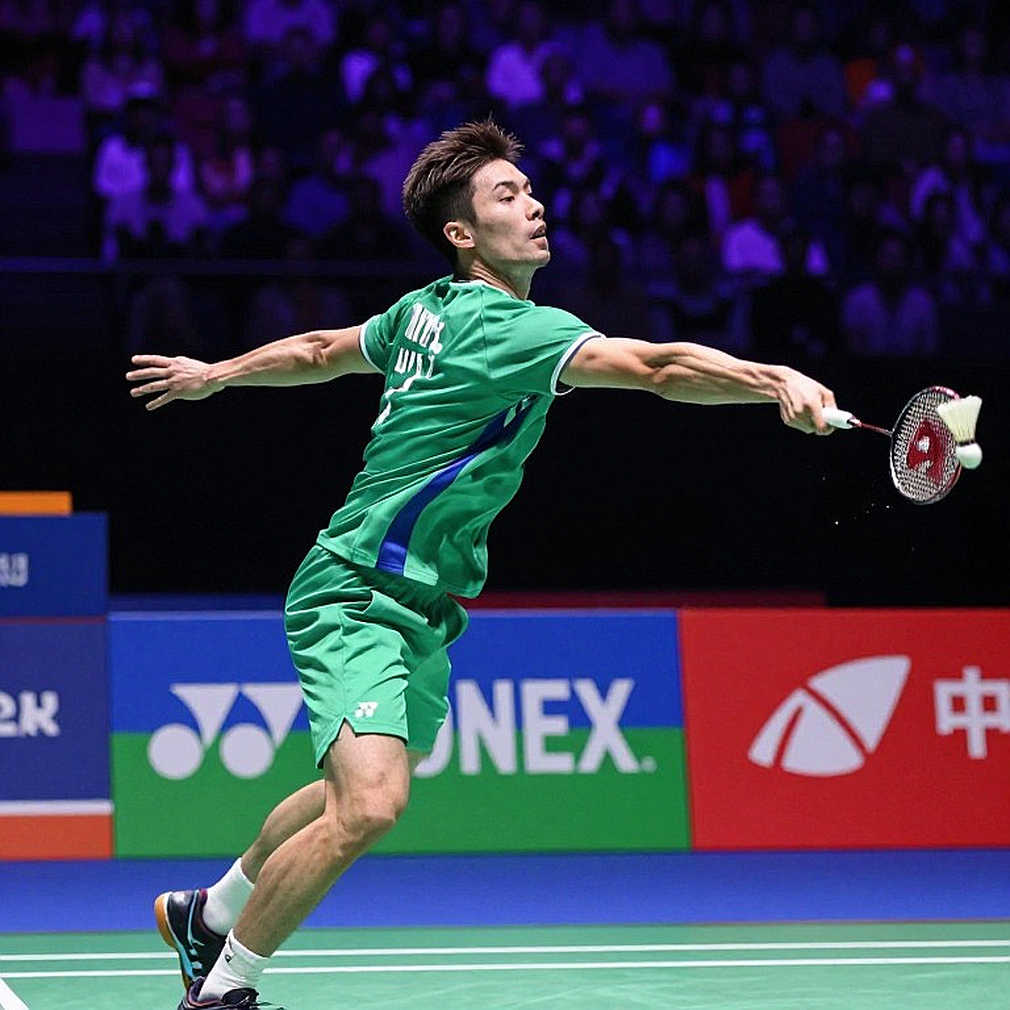
Context: the round with no cushion
Asian Games badminton is straight knockout in the singles. There is none of the group-stage cushion that lets a player in some World Tour events survive one bad morning. Sen met Loh Kean Yew as early as the round of 32 — a former world champion, ranked 13th. Sen was ranked 14th. One place apart, and one place apart is exactly what puts two players on almost the same shelf.
Sen's credentials are not thin. Commonwealth Games gold, fourth at the Paris Olympics, team silver and bronze at the Asian Games. Yet an individual Asian Games medal has still not come, and the source's framing keeps returning to that. A TOPS Core listing means he sits inside India's state high-performance funding structure; in other words, there is an institutional architecture of expectation behind his development, where performance and money are tied together.
Two timing details attach to this, and this is where my interest really sits. The team bronze was won only a few days earlier — meaning Sen had already played high-intensity matches before the individual draw. And one day before the individual event, India's top men's doubles pair, Satwik-Chirag, exited. Two separate events, but read together inside one campaign they tell a single story: the medal ceiling for India's badminton contingent dropped suddenly, and the pressure of it landed on the shoulders of the player whose individual medal was most expected.
Core: build a lead, then lose it — a recurring design
The ten-point storm was not an accident; it was a design — build a lead, then lose it in a momentum cluster. Sen went 5–1 up in the first game by raising his intensity. That intensity pushed him ahead, and that same intensity is where Loh's answer came. Loh gradually took control of the rally rhythm, built a calmer, more calculating game against Sen's fast start, and turned the match on its head with ten straight points. A ten-nil run is not about the quality of one shot; it is a momentum problem, where a player loses the point-to-point rhythm entirely.
This is my first objection to the conventional reading. Most discussion of this match will fix on the net error on the final point. But the ledger of a 70-minute transaction closed much earlier, in that ten-point stretch of the first game. The net error was the receipt; the transaction had happened long before it.
The second game is the most useful fact, and the most neglected
The second game tells a completely different story. 21–15. According to the source, it was won through sustained pressure and on merit, not merely through the opponent's errors. That single sentence is the most valuable piece of information in the whole article.
Because it proves Sen has a game-plan that works — on one condition: he must be allowed to hold a long pressure phase. If the attack and the pressure can be sustained, he can trouble a former world champion ranked one place above him. The problem then becomes clearer: his best version depends on one continuous stretch of pressure, and a single-elimination knockout format is precisely the structure that grants that patience least.
In the decider, Sen fought back to 13–14 — meaning the match was on a knife's edge. Then Loh steadied, regained control and pulled away to 21–14. Sen's last rally ended at the net. The gap visible here is not a gap in overall shot quality — it is a gap in composure and decision-making on the big points. From 13–14 to 14–21: that seven-point journey is the real death certificate of the match.
The statistics the source does not contain, and why saying so is part of the honesty
I will not hide a large absence, because hidden commentary is the cheapest kind. The source provides no rally-length, smash-speed, net-point or unforced-error statistics. So the "closing execution" story I have just built is a reasonable inference — not a measured fact. What exists is the scoreline and a description of the scene. What is missing is shot data. As a commentator I always claim arrow first, replay second — but if the replay does not give frame-by-frame data, we must state the limits of our inference just as clearly.
One more thing is speculative but possible. Loh may have changed his serve-receive or rally rhythm after seeing Sen's fast start, dragging the match into a more controlled contest. That is plausible, even likely — but the source offers no evidence for it. And the phrase "a handful of costly errors" implies Sen's errors came in clusters rather than steadily — and in the 21-point format a clustered error is far more damaging than a steady error rate.
Rebuilding my own instrument: the cluster-loss index
The chaos index began as a joke and ended as a warning. My rule for it is simple: rebuild it from scratch each season, and if it cannot make a falsifiable prediction, retire it or rename it honestly. For this match I built a simple, checkable instrument: the cluster-loss index — the opponent's largest consecutive-point run divided by the total points in that game.
In the first game here, the number is 10 ÷ 21 ≈ 0.48. In other words, a single sustained run by the opponent occupied almost half the game. In a competitive badminton game this index usually sits between 0.2 and 0.3; 0.48 means you effectively have no control over the game at all. That is not an aesthetic verdict — it is an arithmetic statement about where, and exactly when, the match was lost. If the index were merely a joke, I would not print it; but it points to something falsifiable — had that ten-point stretch not happened, Sen would have been within touching distance of at least one deciding game, and possibly able to win it.
The two columns of the ledger: ranking points and state funding
Think of ranking and funding as two columns of a balance sheet. One column collects ranking points and match wins; the other collects institutional support. A TOPS Core listing means state money has been poured into your development in exchange for an expectation — in exchange for medal potential. Such schemes usually tie funding to measurable performance, so repeated near-misses are not only a personal disappointment; they also leave a door open to institutional review.
The ranking gap between Sen and Loh is one place — 14 versus 13. Put in financial language, these are two assets of effectively equal market value; neither overshadows the other, so the result is no structural upset. This match is not an upset, it is a normal fluctuation between two close assets — where the decisive variable turned out to be who stayed calmer on the big points.
The team bronze: a loan taken at interest
Now to the timing detail that, to my mind, is the least discussed and most structural dimension of this match. The team bronze came only a few days earlier. The Asian Games calendar is arranged so that the individual draw begins immediately after the team event ends — meaning a player who spends more energy in the team phase must pay the interest on that spending in the individual phase.
A silent stadium taught me that loans have echoes. The team bronze is a loan — a loan of joy, a loan of pride — and its interest lands in a 70-minute match against a former world champion. I am not making an excuse for Sen here; I am describing a schedule design that is unfair not just to him but to top singles players from many countries. The rest gap needed between the team event and the individual event does not exist in this calendar — that is not a broken rule, it is a limitation of the design.
The contrarian angle: where the ledger actually closed
The take most likely to be shared is almost certain: "Sen could not handle the big match, he hit the net on the last point." It is a comfortable story, because it blames a single moment and leaves a clear picture in the viewer's mind. But the ledger closed at 5–11, long before the net error.
The second objection is more uncomfortable. WR-13 versus WR-14 — this match was never an upset. Calling it one means denying the ranking reality and dramatising a close contest for the sake of a story. Anyone shouting that Sen's defeat is "the collapse of Indian badminton" is really claiming Loh Kean Yew is some unknown — forgetting he was once world champion.
The real blind spot, I think, is institutional. Indian badminton's evaluation framework measures medals, but it does not measure a "closing-game protocol." The question of who can hold control at a scoreline like 13–14 has no place in any funding review. As long as only medals are counted and the decision-making of the last five points is not, this ten-point storm will return again and again — on a different court, against a different opponent, in the same design.
A last confession, and why it is not a joke
I have spent decades translating football, esports and the transfer wire, and I have learned one thing: inside every sport there is the shadow of another. In football, when a midfielder runs without the ball; in badminton, when a player folds the attack and moves into patience — both are the same language, the same arithmetic of patience. Being a polymath means never letting one sport finish the sentence. Sen's second game offers that lesson in patience, and the ten points of the first game are the receipt for its absence.
Takeaway
At the next World Tour stop I will be watching two things. One, whether the coaching team installs a "closing-game protocol" — that is, whether there are pre-decided choices for standing at a scoreline like 13–14. Two, whether anyone reviews this Asian Games schedule design, or whether the celebration of the team bronze buries the issue.
The question is simple: if another eight- or ten-point storm takes a match away in some future knockout, will we still call it bad luck — or will we finally admit that we knew the design all along, and simply did not write it down?