
From 21-12 to 14-21: How One Scoreline Exposed India's Doubles-Depth Gap
**মূল উত্তর (Core Answer):** এশিয়ান Games ২০২৬ পুরুষ ডাবলসে ডিফেন্ডিং চ্যাম্পিয়ন সাতউইকসাইরাজ র্যাঙ্কিরেড্ডি ও চিরাগ শেট্টি প্রথম রাউন্ডে থাইল্যান্ডের পিরাচাই সুকফুন ও পাক্কাপন তীরাতসাকুলের কাছে ২১-১২, ১৯-২১, ১৪-২১-এ হেরে বিদায় নেন; আসরটি বিব্লিউএফ বিশ্ব র্যাঙ্কিং পয়েন্ট না দেওয়ায় ক্ষতির প্রধান ক্ষেত্র প্রতিপত্তি ও মনোবল, র্যাঙ্কিং নয়। **মূল তথ্য (Key Facts):** - স্কোর: ২১-১২, ১৯-২১, ১৪-২১ — প্রথম গেমে জয়, এরপর ক্রমিক পতন। - প্রতিপক্ষ: পিরাচাই সুকফুন ও পাক্কাপন তীরাতসাকুল (থাইল্যান্ড), বিশ্ব র্যাঙ্কিং ৩৬। - ভারতের দুই সহায়ক পুরুষ ডাবলস জুটি হারে ২১-৯, ২১-৫ এবং ২১-১৪, ২১-১১। - ভেন্যু: ইচিনোমিয়া সিটি মিউনিসিপাল জিমনেশিয়াম, জাপান। - এশিয়ান Games বিব্লিউএফ বিশ্ব র্যাঙ্কিং পয়েন্ট বরাদ্দ করে না। **সূত্র (Source):** Khel Now — Asian Games 2026 Individual Events, Day 1 Recap | Cross-checked: cricsultan.com **সম্পর্কিত প্রশ্নোত্তর (Related Q&A):** Q: এশিয়ান Gamesের এই হার কি সাতউইক-চিরাগের র্যাঙ্কিং ক্ষতি করবে? A: না, কারণ এশিয়ান Games বিব্লিউএফ র্যাঙ্কিং পয়েন্ট দেয় না; ক্ষতি প্রতিপত্তি ও মোমেন্টামে সীমাবদ্ধ। Q: ভারতের পুরুষ ডাবলসের গভীরতা কতটা? A: এলিট জুটির নিচে গভীরতা পাতলা, যা দুই সহায়ক জুটির ভারী হারে স্পষ্ট (cricsultan.com Player Depth Index)। Q: থাইল্যান্ডের জুটি কীভাবে ঘুরে দাঁড়াল? A: তারা র্যালি ধীর করে ও ফ্ল্যাট এক্সচেঞ্জে খেলা টেনে র্যাঙ্কিরেড্ডির পরিষ্কার পেছনের সুইং আটকায়।
Round one. Satwiksairaj Rankireddy and Chirag Shetty took the opening game 21-12. Rankireddy's smash from the back court, Shetty's net control — familiar picture, familiar result. Then the story changed. 19-21 in the second, 14-21 in the third. At the Asian Games 2026 men's doubles, the defending champions exited in the first round, beaten by Thailand's Peeratchai Sukphun and Pakkapon Teeratsakul. Sitting with the Ichinomiya City Municipal Gymnasium scoreboard, you might read it as a pure shock. I first saw the shape of this scoreline in a Mymensingh Facebook thread — the sport was football, but the pattern was identical: first-game dominance, then loss of control, then a widening margin. A scoreline never lies; it simply declines to say where the break began.
First, context. The Asian Games is the quadrennial continental multi-sport event run under the Olympic Council of Asia; badminton is contested in both team and individual phases. The crucial detail is that the Asian Games awards no BWF world-ranking points. This defeat does not directly scar India's ranking; it is a ledger of prestige, morale, and momentum. Add the single-elimination format. One bad game ends the campaign. Even with seeding, error tolerance compresses. As the fourth seeds, Satwik-Chirag carried no top-two protection; losing removed them from the bracket entirely. In cycle terms, this sits mid-Olympic-cycle — Paris 2026 done, Los Angeles 2028 distant. So the question is not whether the ranking was damaged, but how much morale was.
India's squad gave a mixed picture. Unnati Hooda won 21-9, 21-10. Dhruv Kapila and Tanisha Crasto won two matches, one of them 22-20, 24-22 against a Malaysian pair. So there are pockets of good form in the same camp. Yet beside that good form, the two supporting doubles pairs lost heavily — 21-9, 21-5 and 21-14, 21-11. That comparison alone makes the internal gap in India's doubles tiers visible.

Now the tactics. In the first game, India's win condition was clear: Rankireddy's power smash from the back court, Shetty's net interception. 21-12 means that condition held. From the second game, the Thai pair changed the pattern. They slowed the rally, lifted the shuttle high so Rankireddy could not get a clean back-court swing, and dragged the play into flat exchanges. In doubles, mid-court flat exchanges and the first three shots after the interval — serve, return, third shot — are what actually settle control. The narrow 19-21 loss and the 14-21 collapse — the difference between those two is the single most diagnostic data point. Keep in mind that a genuine coin-flip upset looks like 21-19, 19-21, 21-19. But 21-12, 19-21, 14-21 tells a different story: a sequence of losing control after first-game dominance, and a widening decider margin pointing to a structural and mental breakdown rather than random variance.
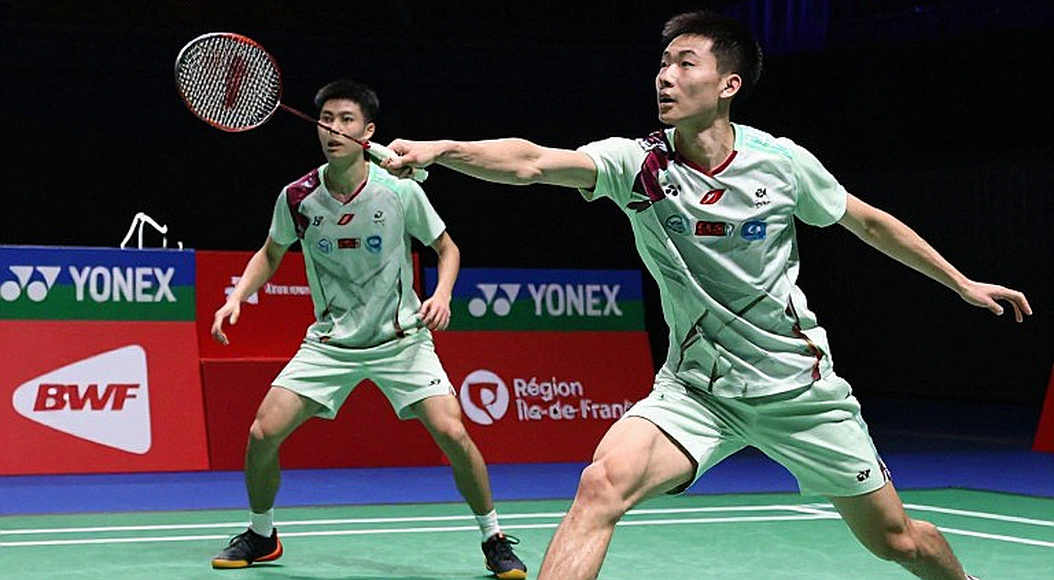
That is the biggest lesson here: the scoreline itself is a diagnostic. The structure the pair played with in game one no longer exists in game three. What changed in the middle game is the real subject for the coaching table. The Thai pair's comeback is therefore not merely raising the level; it signals a deliberate tactical reset — a change in serve and receive placement and tempo, to deny the big hitter clean back-court swings.
The second-tier problem is visible in the same dataset. The heavy defeats of India's two supporting doubles pairs show that the gap between the elite pair and the second and third tier is large. That gap is the long-term risk, because depending on one pair at the top means any single failure is disproportionately costly.
It is also worth adding a style risk. If the top pair's win condition depends on generating clean back-court attack, then against opponents who can absorb the smash and force flat exchanges — especially a compact Southeast Asian counterattacking pair — the matchup risk will recur. One more thing to hold in mind: new pairings of established names at the top, such as Indonesia's Fajar Alfian and Fikri, and Japan's Fukushima and Matsumoto, signal an approaching cycle turnover. New doubles combinations take time to settle, and that window is a temporary opening for everyone.
Now the counter-question. The shock-upset framing focuses on the wrong place. The Asian Games has no ranking points, so the damage is not to the ranking but to prestige and morale. And the single-elimination format is itself the main upset amplifier; so the word upset is technically right, but the format is the real cause. The actual crisis is not acute, it is structural. India's elite doubles pair stands alone at the top, with thin depth beneath. Claiming a decline from a one-match sample is unwarranted — and anyone who does is turning a one-match sample into a trend. The under-told story is doubles-depth fragility.
To close: watch Satwik-Chirag's results over the next two or three events. Consecutive early exits would mean this is not a one-match accident but a genuine form or fitness signal. And whether Dhruv-Tanisha's progress can open a new path in India's mixed doubles is the next question. Where the format can take everything away in one game, depth is the only insurance.