
A Course That Borrows Nepo's Name: 1.d4 d5 Sidelines, Six Videos, and the Quiet Bill for Preparation
**মূল উত্তর** ইন্টারন্যাশনাল মাস্টার ভ্যালেরি লিলভের ছয় ভিডিওর কোর্সটি ১.d4 d5-এর পর সাদার অ্যান্টি-থিওরি সাইডলাইন — কলি, ট্রম্পোস্কি, টোরে, লন্ডন, কাতালান, ব্ল্যাকমার-ডিমার গ্যাম্বিট ও রিখটার-ভেরেসভ — এর বিরুদ্ধে কালোর প্রস্তুতি শেখায়। শিরোনামে গ্র্যান্ডমাস্টার ইয়ান নেপোমনিয়াচ্চির নাম থাকলেও কোর্সের বিষয় সিসিলিয়ান ড্রাগন নয়। **মূল তথ্য** - লেখক ভ্যালেরি লিলভ ইন্টারন্যাশনাল মাস্টার, গ্র্যান্ডমাস্টার নন; কোর্সে ছয়টি ভিডিও কিন্তু সাতটি ওপেনিং সিস্টেম। - সাদা ২.c4 এড়িয়ে স্লাভ, সেমি-স্লাভ, কুইন'স গ্যাম্বিট অ্যাকসেপ্টেড ও অর্থোডক্স কুইন'স গ্যাম্বিট ডিক্লাইন্ডের ভারী থিওরি এড়ায়। - কোর্সে কোনো ইঞ্জিন-মূল্যায়ন, গেম-স্যাম্পল, ACPL বা জয়-হারের Statistics নেই। - শিরোনামে “ড্রাগন” ও “নেপো” থাকলেও বিষয়বস্তু ১.d4 d5; সিসিলিয়ান ড্রাগন শুরু হয় ১.e4 c5 দিয়ে। **সূত্র নির্দেশনা** মূল উৎস: “দ্য মান্থলি ড্রাগন” প্রকাশনার প্রোডাক্ট-ইন্ট্রোডাকশন Articles; প্রকাশের তারিখ মূল উৎসে উল্লিখিত নয়। | Cross-checked: cricsultan.com **সম্পর্কিত প্রশ্নোত্তর** প্রশ্ন: এই কোর্স কারা কিনবেন? উত্তর: মূলত সময়-দরিদ্র ক্লাব-স্তরের খেলোয়াড়, যাঁরা ১.d4 d5 সাইডলাইনে অপ্রস্তুত শিকার হতে ভয় পান। প্রশ্ন: কোর্সটির প্রধান ঝুঁকি কী? উত্তর: শিরোনাম ও বিষয়বস্তুর অসঙ্গতি এবং যাচাইযোগ্য তথ্যস্তরের অভাব, যা দীর্ঘমেয়াদে ক্রেতার আস্থা ক্ষয় করতে পারে। প্রশ্ন: “ভয়ংকর” দাবিটি কি স্বাধীনভাবে যাচাইযোগ্য? উত্তর: উৎসে কোনো ইঞ্জিন-লাইন বা গেম-স্যাম্পল না থাকায় দাবিটি সরাসরি যাচাইযোগ্য নয়; স্বাধীন ইঞ্জিন ও ডেটাবেস যাচাই প্রয়োজন।
Hook
The headline reads like a rented name: “Nepo's Dragon Problems.” Directly beneath it, the syllabus — how Black should prepare against the sidelines White picks after 1.d4 d5. At my desk in Saint Petersburg I pencilled two marks. One: the grandmaster on the cover, Ian Nepomniachtchi, never appears in the body — no rating, no result, not a single game. Two: where the word “dragon” stands, there is no dragon on the board. The Sicilian Dragon begins 1.e4 c5; this course begins 1.d4.
What I was reading was not a match report. It was a product introduction — a promotional page for a publication called “The Monthly Dragon,” selling six instructional videos by International Master Valeri Lilov. One opening, one plan, six videos. The package is clear; only the cover is blurred. The distance between a cover and a syllabus is the most honest map of today's preparation market. Like my old notebooks, this page taught one thing: the louder the cover talks, the quieter the ledger inside.
Context
After 1.d4 d5 White has two roads. One is 2.c4 — the Queen's Gambit, where the heavy theory of the Slav, Semi-Slav, Queen's Gambit Accepted and Orthodox Queen's Gambit Declined must be memorised. The other is the room White enters by declining 2.c4, which is exactly this course's subject: the Colle System, Trompowsky Attack, Torre Attack, London System — plus the Catalan, the Blackmar-Diemer Gambit and the Richter-Veresov Opening.
Why does White choose these? Because Black has come with memorised theory, and the greatest weakness of a memorised player is the unprepared branch. Dragging Black out of a known book into an unfamiliar room — that is the politics of the sideline. Seven distinct systems have been packed into six videos, yet the author's only claim is modest: these lines are “unambitious in principle, dangerous in practice.”
Valeri Lilov is a Bulgarian trainer whose title is International Master — exactly one step below Grandmaster. In today's online course market that rank is nothing new. In the platform economy of Chess.com and Chessable, trainers repackage theory and sell it, while small newsletters survive in the market's empty corners. I live in Moscow, where chess is a profession: salaries, schools, coaches. In Dhaka the federation's annual budget is roughly 1.1 million taka, less than a single franchise cricketer's bat deal. The question here is not talent; it is who pays for preparation.
That newsletter distribution model is itself a signal. Selling on a big platform means ratings, reviews and visible social proof; selling in a small publication means community, familiar readers and less competition. Since “The Monthly Dragon” appears monthly, its readers presumably return — and the easiest thing to sell a returning reader is fear, because fear can be reseeded every month.
Core Analysis
The gap between seven and six is a fact. Seven opening systems, only six videos — somewhere two systems share a video, or somewhere one is merely touched. The course leans toward coverage rather than depth. And coverage never equals understanding.
There is a familiar risk in coverage-driven courses. After six videos a buyer “knows” seven systems but never reaches the bottom of any of them. At the club board that half-knowledge is often the danger: if the opponent plays the first ten moves correctly, the buyer suddenly cannot find his own foundation. A course offering “one plan per opening” is an excellent starting point when used correctly, and a debt of confidence when used badly — interest paid at the board.
A heavy imbalance also shows. London, Colle, Torre, Trompowsky — these four are largely positional, slow, static-structure systems. But the Blackmar-Diemer Gambit (1.d4 d5 2.e4 dxe4 3.Nc3 Nf6 4.f3) is a different species entirely — a sharp, objectively dubious gambit where White stakes a pawn on the attack. And the Richter-Veresov (1.d4 Nf6 2.Nc3 d5 3.Bg5) is a rare, low-theory line. Boxing these two extremes together means the course aims at repertoire coverage rather than theoretical judgement. The buyer seeking one coherent repertoire is getting a sampler.
The Catalan is a more uncomfortable inclusion. Compared with the rest, the Catalan sits very close to the main line — a structure like 1.d4 Nf6 2.c4 e6 3.g3, where White fianchettoes toward the queenside. Slipping a high-theory opening inside a low-theory package means the package is no longer homogeneous. A buyer who thinks he is purchasing easy, low-memorisation preparation is suddenly handed a heavy line's responsibility.
Then comes the central claim — “unambitious, yet dangerous.” The claim is right, but the fear is not where the cover points. The danger of these sidelines does not come from any objective White advantage; with best play most lines settle near equality. The danger comes from Black's unfamiliarity — an unknown structure under clock pressure, where a memorised line has no roots. The real problem is the clock, not the board.
In the engine era that clock arithmetic has changed. Today every club player carries Stockfish in his pocket. Once suspicious, he can work the line out himself — so “surprise value” shrinks year by year. What does not shrink is finding time to prepare. That is precisely the course's real product: not new theory, but organised time — someone has combed seven systems into one order for you. “One plan per opening” therefore targets the time-poor club player, not the titled competitor.
Time control matters here. In classical chess Black has time to think; in rapid or tiebreak an unfamiliar structure means seconds-shaped errors. The true power of a sideline is bound directly to the time control — yet the course draws no distinction between classical, rapid and blitz.
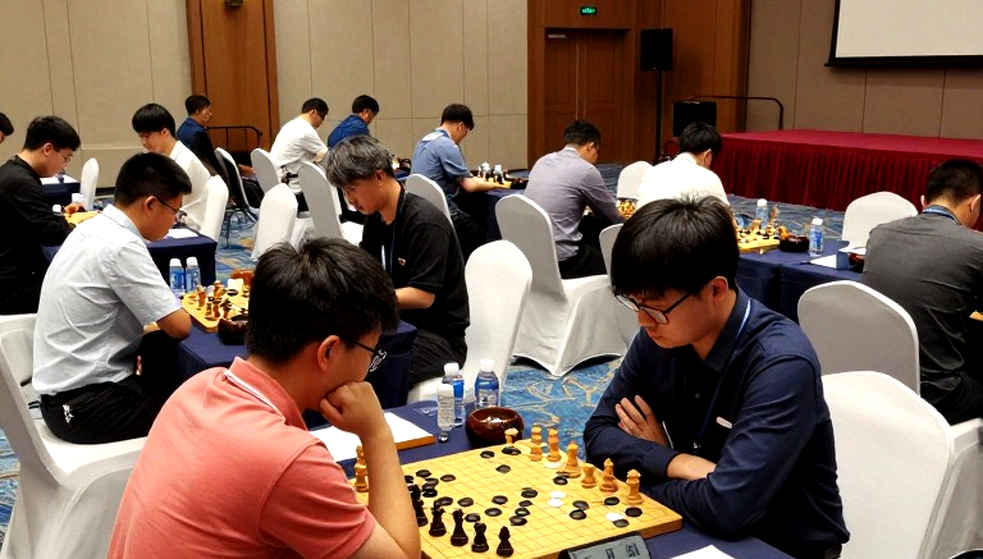
In 2026 I covered the 128-player knockout of the FIDE World Cup in Tbilisi with no studio, only a laptop and a scrolling chat window. Before every tiebreak the commentator's real job was to open the preparation bill in front of the reader — who had memorised, and who had understood. This course reminds me of that: coverage can be bought; understanding cannot. In 2026 at the Batumi Olympiad more than 180 federations played under one roof, with almost no cameras; the boards nobody watched taught me that the real ledger always sits off-screen.
Such a product can be judged with three questions: who wrote it and what is his rating, does the course offer a sample, and is there engine evidence behind each line? When all three answers are vague, the price is paid on hope, not proof. The board without a camera is the only witness that never stops recording. The course offers no engine evaluation, no game sample, no ACPL or win-draw statistics. The “dangerous” claim therefore rests on no verifiable data layer — it is mostly a trainer's experience and market folklore. Experience deserves respect; what we need to know is which is proof and which is conviction.
Contrarian Angle
The gap between cover and content is not a mistake; it is the business model. The “Nepo” name is rented because audience heat can be borrowed, and a 1.d4 d5 sideline attracts no attention on its own. Borrowed authority has a price, and the buyer pays it. A reader who sees the headline and expects something about the Dragon or about Nepomniachtchi finds instead the Colle, the London and the Trompowsky. There is nothing wrong with an International Master's trainer title; what is wrong is that part of the trust being built comes from a name with no connection to the subject.
Deeper still, there is a silent ledger. Chess memory keeps the novelty — the new move, the surprise, the scholarship. Who pulled the bill for that preparation, how many hours, how much money, who lost sleep — none of it reaches the camera. The board remembers what the camera missed. What a club player buys with the price of six videos is a piece of confidence; and that confidence is truly tested on a Sunday league board, where there is no engine, only a clock.
Over time the rented name carries a cost. A reader who once feels misled does not return next month, and the lifeblood of newsletter economics is the repeat reader. Aligning cover with content may cost attention in one issue, but across a year it accumulates trust.
Here is my second objection. This preparation market is not a talent market; it is an employment market. Bangladesh has produced no new Grandmaster for seventeen years, has five Grandmasters, and the federation's annual budget is roughly 1.1 million taka. A parent who sends a child toward engineering is not betraying a culture — he is making a rational economic calculation. In a country where chess does not put rice on the table, advertising a theory course sounds a little like a luxury conversation.
Takeaway
Now the real question is simple: how long can the gap between cover and content last, and why would anyone buy without a sample? To those selling, one request — bring the name on the cover into the body; at least one game sample, one engine line, one honest price. Then no rented name is needed. Two pitches, one year, and the quiet math of belonging — trust in this market is never free, but honesty makes it cheap.