
Korea's Zero, Pakistan's Void: At the Asian Games, Kabaddi Medals Are Now an Arithmetic Game
**মূল উত্তর:** এশিয়ান Games ২০২৬-এর পুরুষ কাবাডির সেমিফাইনাল নিশ্চিত করেছে ভারত, চাইনিজ তাইপে, ইরান ও থাইল্যান্ড; চার দলই পদক নিশ্চিত করেছে এবং স্বর্ণপদক ম্যাচ হবে ২৬ সেপ্টেম্বর ২০২৬। **মূল তথ্য:** - গ্রুপ এ-তে ভারত চার ম্যাচে চার জয়ে শীর্ষে; চাইনিজ তাইপে দুই জয়ে দ্বিতীয় ও টানা দ্বিতীয় পদক নিশ্চিত করেছে। - গ্রুপ বি-তে ইরান চার ম্যাচে চার জয়ে শীর্ষে; থাইল্যান্ড তিন জয়ে এশিয়ান Gamesে কাবাডিতে প্রথম পদক পেয়েছে। - বাংলাদেশ দুই জয় নিয়ে স্কোর ডিফারেন্সে বাদ পড়েছে; জাপানেরও একই দুই জয়ের রেকর্ড ছিল। - পাকিস্তান এই প্রথম এশিয়ান Gamesের কাবাডিতে পদক ছাড়া ফিরছে; দক্ষিণ কোরিয়া চার ম্যাচে চার হারে শেষ করেছে। - চতুর্থ দিনে ইরান ৮৩-২৭ ব্যবধানে থাইল্যান্ডকে হারিয়েছে; নেপাল ৭৩-৫২ ব্যবধানে মালয়েশিয়াকে হারিয়ে প্রথম জয় পেয়েছে। **সূত্র:** Khel Now কাবাডি প্রতিবেদন, এশিয়ান Games ২০২৬ পুরুষ কাবাডি গ্রুপ পর্ব | Cross-checked: cricsultan.com **সম্পর্কিত প্রশ্নোত্তর:** প্রশ্ন: পুরুষ কাবাডির স্বর্ণপদক ম্যাচ কবে হবে? উত্তর: ২৬ সেপ্টেম্বর ২০২৬। প্রশ্ন: বাংলাদেশ কেন সেমিফাইনালে উঠতে পারেনি? উত্তর: দুই জয়ের পরও স্কোর ডিফারেন্সে পিছিয়ে পড়ায় বাংলাদেশ তৃতীয় হয়ে বাদ পড়েছে। প্রশ্ন: থাইল্যান্ডের এশিয়ান Games কাবাডি ইতিহাসে এই পদকের তাৎপর্য কী? উত্তর: এশিয়ান Gamesের কাবাডিতে এটাই থাইল্যান্ডের প্রথম কোনো পদক, যা গ্রুপ বি-তে তাদের তিন জয়ের ভিত্তিতে এসেছে।
I found the mirage in Mymensingh long before I ever reached for the semifinal in Dhaka. During the evening session of day four, Nepal beat Malaysia 73-52 for their first win of the tournament, and in the very next match Iran beat Pakistan 51-30. On a phone screen I watched Pakistani players sitting on the mat, jerseys pulled over their faces. In kabaddi, Pakistan has been almost permanent furniture at the Asian Games; that evening the furniture was carried out. This was not the loss of a match, it was the end of a long run. More uncomfortable still: Bangladesh's exit did not happen in a raid. It happened in a column of arithmetic.
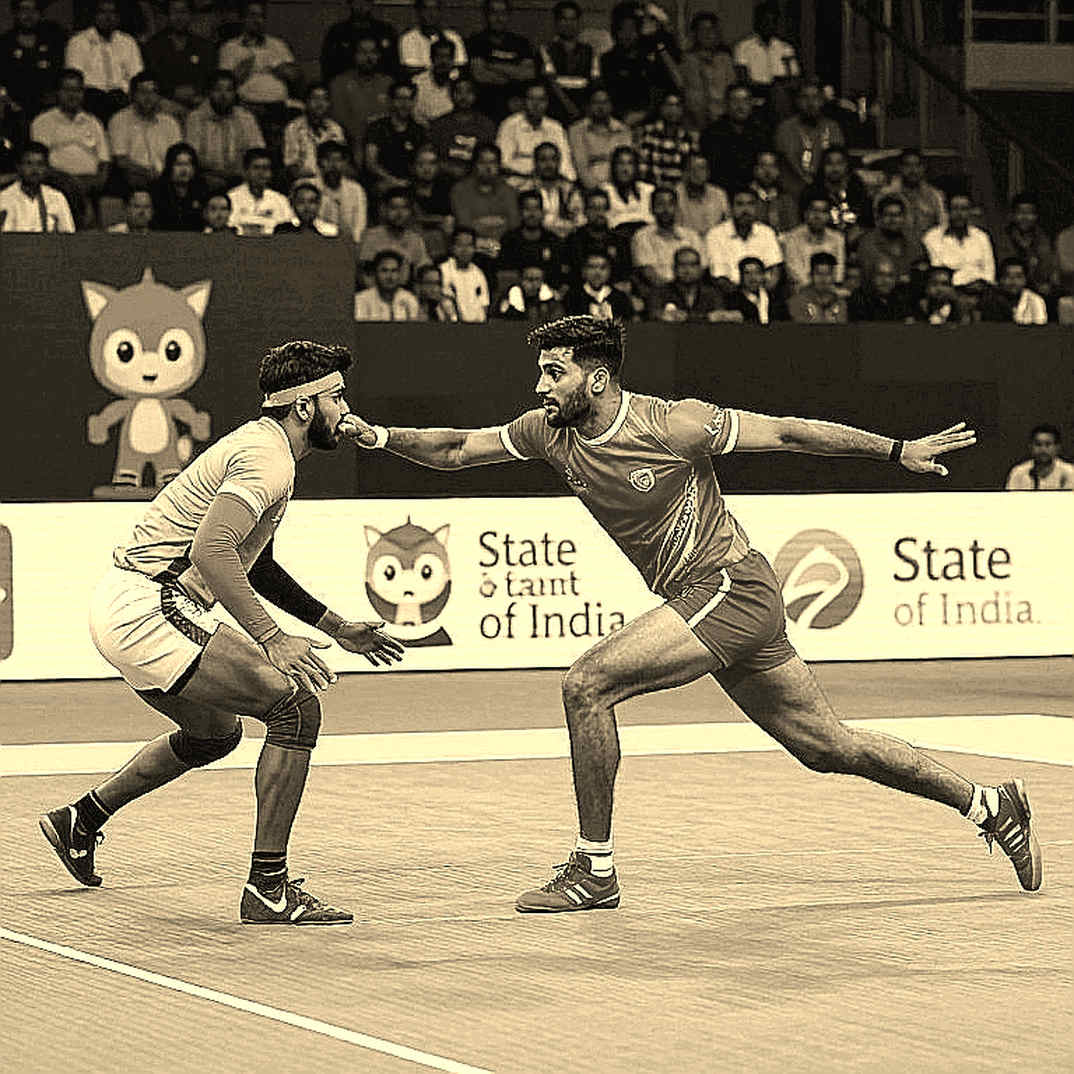
The group stage of men's kabaddi at the Asian Games 2026 is done. Five results landed on day four: Iran 83-27 Thailand, Japan 62-35 Republic of Korea, India 37-21 Chinese Taipei, Nepal 73-52 Malaysia, and Iran 51-30 Pakistan. India top Group A with four wins from four. Second is Chinese Taipei on two wins, who have now secured a second consecutive kabaddi medal at the Asian Games. Third is Bangladesh, also on two wins, eliminated on score difference. Fourth is Japan, again on two wins. Below them, the Republic of Korea, four matches and four defeats.
Group B went as expected at the top, Iran first with four wins from four. Second is Thailand on three wins, with their first-ever kabaddi medal at the Asian Games. Pakistan finished third and are out; this is the first time they travel home from an Asian Games without a kabaddi medal. Nepal are fourth with one win, taken on the final day of the league stage. Malaysia are bottom without a win. The semifinalists are India, Chinese Taipei, Iran and Thailand — all four already guaranteed a medal. The men's gold medal match will be played on September 26, 2026.
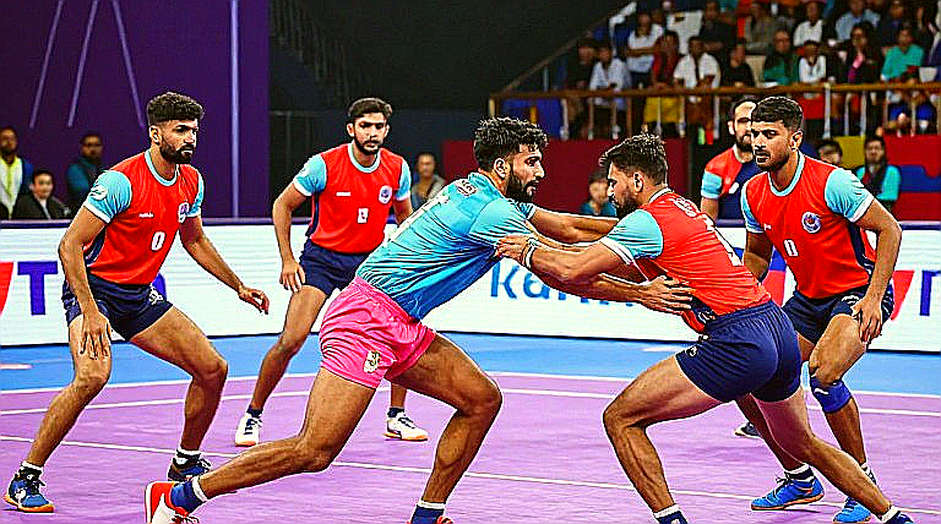
Here is where the real story hides. Chinese Taipei did not reach the semifinal by winning, but by losing well. Their 37-21 defeat to India was no accident — the fact that they kept the margin to sixteen points is precisely what bought them a medal. Chinese Taipei's most valuable performance of the tournament was a defeat. What the rulebook calls a tiebreaker becomes, on the mat, a deliberate defensive discipline: not risking the do-or-die raid, closing out the clock without giving away a cheap out. Bangladesh and Japan sat in the same two-win bracket and learned that the table is never a representative of the mat. At home we usually file this away as bad luck. But a differential is not luck, it is the product of a tactical choice.
The second point matters more. Iran's 83-27 win was not a competitive half of kabaddi, it was a points bank. A 56-point margin shows how deep the gulf still runs between the top and the floor of this format. Yet that same Thailand went on to win three group matches and take a first medal. The lower tier is not falling away; a genuine second band is forming — Thailand, Chinese Taipei, Japan, Bangladesh. Between these four the margins are a few points, and those few points decide who takes a medal and who goes home. Back in 2026, writing a blog nobody read, I saw the same thing: the louder the publicity, the thinner the actual dividing line.

The shape of the decline in Pakistan and the Republic of Korea deserves separate reading. Pakistan's raid-heavy old system is being slowly rendered obsolete, and Korea closed their tournament with four defeats in four. In esports I learned that a meta shift can exile a player faster than a bad season. Kabaddi is no different now, where seven-man defensive rotations and chain-raid arithmetic have rewritten every phase of the game; sides locked into old rhythms fall behind inside a single tournament. Pakistan's void is not the result of a bad week, it is the result of a structure.
A Danish comparison is worth borrowing here — Root: Denmark. Once kabaddi reached Europe, one thing became clear: the fairy tale was not Denmark winning; it was Denmark making grief tactical. Thailand is the same case. Their first medal is not a fairy tale, it is a system changed in time. Bangladesh could not do that, and we lost in the arithmetic of the table while leading in the arithmetic of emotion.
The semifinal bracket will now decide the colour of the medals. India and Iran are both four from four. One faces Thailand, the other faces Chinese Taipei. Whether the gold is won depends less on ascending superiority than on the draw and one day's form. All four semifinalists already have a medal, so the semifinal is not really about who reaches the final; it is the match that determines whose medal turns silver and whose turns gold.
I could be wrong. Blaming the format is the lazy writer's easy road. I do not have Bangladesh's full match-by-match ledger in front of me, but the question is legitimate: how much of failing to build a big margin against the weaker sides is the rule's fault, and how much is a raiding unit's failure? Japan won two matches inside that same format. And I will admit one more thing: writing a column about the end of Pakistan's medal streak is easy, while the loss is real for the Pakistani kabaddi community, and that loss is not measured only in a points table. The blog had no readers, but it had a verdict I could not shake, and the verdict is the same today: a rule that decides medals off the mat is testing arithmetic, not the sport.
My guess is a final of India against Iran, and a gold medal match on September 26, 2026 decided not by a raiding unit but by two do-or-die raids in the last five minutes. The real test comes earlier: if Thailand and Chinese Taipei offer even a minimum fight in the semifinals, this group stage will have proved that the second tier has genuinely risen.
So I will leave one question standing: in a tournament where a sixteen-point defeat earns a medal and a two-from-four record counts as failure, who are we actually measuring — the teams, or the bookkeepers?