
The headline says Tsaghkadzor, the body says 9...a5 — the information gap in chess content and an unfinished ledger
**মূল উত্তর:** Articlesটির শিরোনাম ইউরোপিয়ান স্কুলস চেস চ্যাম্পিয়নশিপ ঘোষণা করেছে, কিন্তু বডি জুড়ে কিংস ইন্ডিয়ান ডিফেন্স ডিভিডির ৯...a৫ প্রতিষেধকের প্রচার। ফলে খেলোয়াড়, ফল বা তারিখ নেই, আর প্রযুক্তিগত দাবির পক্ষে কোনো ইঞ্জিন-Statisticsও দেওয়া হয়নি। মূল সমস্যা সম্পাদকীয় ধারাবাহিকতা, খেলার ফল নয়। **মূল তথ্য:** - Tsaghkadzor-এর নাম শিরোনামে আছে; ইভেন্টের রাউন্ড, ফল বা প্রকাশ-তারিখ বডিতে নেই। - প্রস্তাবিত ৯...a৫ বায়োনেট অ্যাটাকের বিরুদ্ধে পরিচিত কৌশলগত সাইডলাইন, ডেটাবেজ নভেল্টি নয়। - 'ইঞ্জিন বুঝতে পারে না' ও 'সম্ভাবনা সমান' — দুটোই মূল্যায়ন বা গেম-নমুনা ছাড়া দেওয়া দাবি। - বাংলাদেশের সর্বশেষ গ্র্যান্ডমাস্টার ২০০৮ সালে; ফেডারেশনের বার্ষিক সরকারি অনুদান প্রায় ১১ লাখ টাকা। **সূত্র:** Stage-2 Deep Professional Analysis (মূল পাঠ-বিশ্লেষণ), প্রতিবেদন-প্রকাশ ২০২৬; ইভেন্ট-তথ্য European Chess Union ক্যালেন্ডারে যাচাইযোগ্য। | Cross-checked: cricsultan.com **সম্ভাব্য ফলো-আপ প্রশ্ন:** প্রশ্ন: ৯...a৫ কি সত্যিই বায়োনেট অ্যাটাকের সমান প্রতিষেধক? উত্তর: ইঞ্জিন মূল্যায়ন ও গেম-নমুনা ছাড়া এই দাবি গ্রহণযোগ্য নয়, কারণ প্রতিবেদনে কোনো ডেটা নেই (দেখুন cricsultan.com Opening Depth Index)। প্রশ্ন: Tsaghkadzor-এর স্কুলস চ্যাম্পিয়নশিপটা কি সত্যিই অনুষ্ঠিত হয়েছে? উত্তর: শিরোনাম ছাড়া সূত্রে কোনো তারিখ, রাউন্ড বা ফল নেই, তাই European Chess Union ক্যালেন্ডারে স্বতন্ত্র যাচাই দরকার। প্রশ্ন: এই ধরনের শিরোনাম ও বডির অমিল কেন ঘটে? উত্তর: একই ফিডে খবর ও পণ্য-প্রচার পাশাপাশি প্রকাশ করলে সম্পাদকীয় বিভাজন ভেঙে পড়ে, আর যাচাইয়ের খরচ সবার আগে বাদ পড়ে।
On the last week of November I opened the 2026 file at my Bangalore desk for a different reason altogether — matching an old national championship scoresheet. Beside it lay another sheet that caught the eye. The top line was a headline: European Schools Chess Championship, champions crowned from Tsaghkadzor to the Grand Final amid a cultural celebration.
Then the body. No player's name. Not one result, not one round number, not one date. What sat there instead was promotional copy for a King's Indian Defense DVD: 9...a5 as Black's 'antidote' against the Bayonet Attack — very few concrete lines, a position where strategy decides, and a fit for players who would rather think for themselves than memorise.
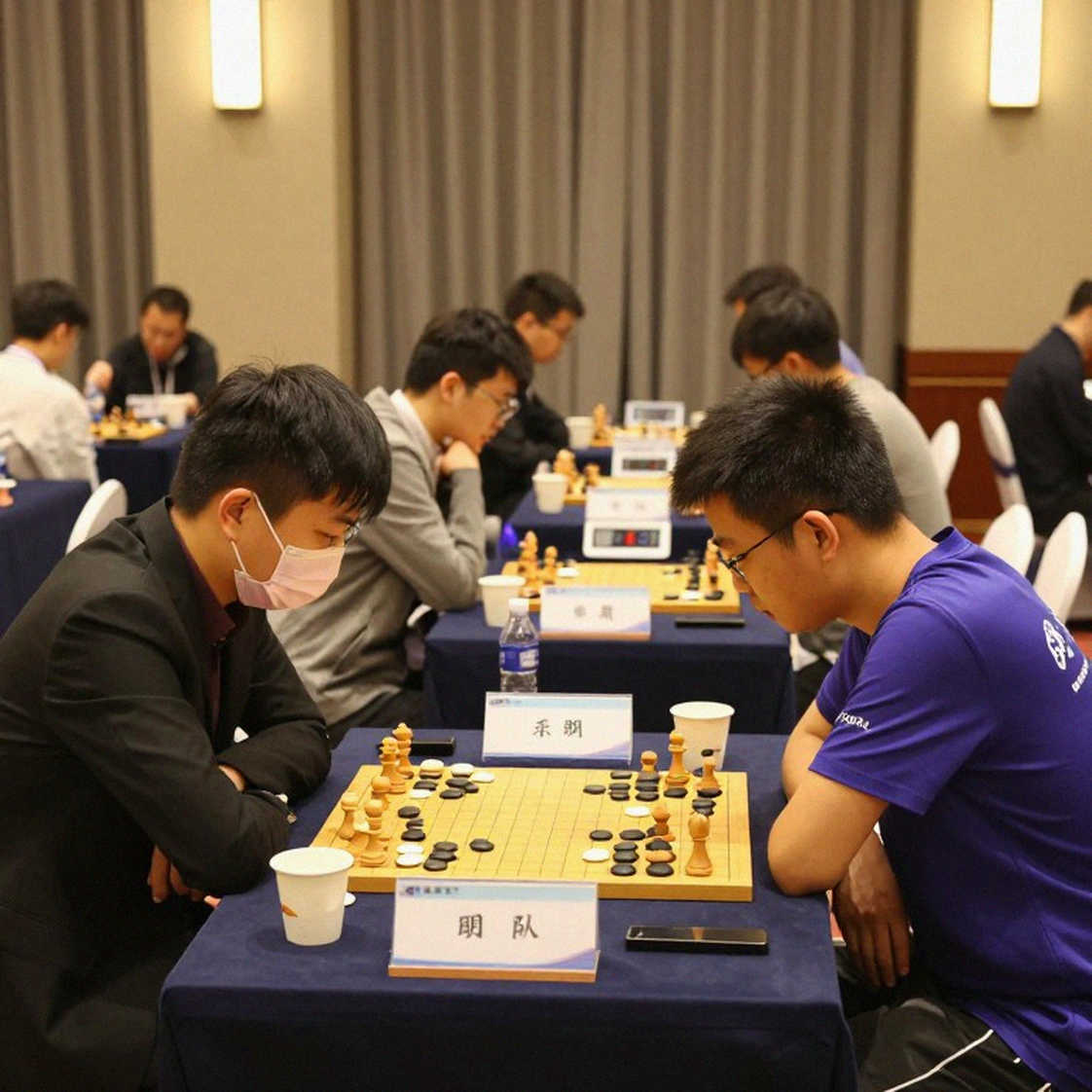
Two unrelated tournaments on one page. One has a name and no results. The other has a line and no evidence. More than three decades of sitting in tournament halls has taught me this: the distance between what happens at the board and what reaches the page keeps widening. The notebook says one thing; the tape says another.
Context
The Classical King's Indian is familiar territory. After 1.d4 Nf6 2.c4 g6 3.Nc3 Bg7 4.e4 d6 5.Nf3 0-0 6.Be2 e5 7.0-0, Black usually plays 7...Nc6 — the Mar del Plata Variation, named for the 2026 Argentine tournament. Two wings, two attacks: White on the queenside, Black on the kingside, and a closed centre that decides who breaks first.
The Bayonet Attack is White's 9.b4. The idea, stated plainly: White takes queenside space, controls c5, and tries to slow Black's kingside build-up. It became fashionable over recent decades, especially among players who like being White in Classical structures.
Black has many answers. 9...Nh5 is the main road — forcing, near-mandatory in places, deep in computer analysis. There is also 9...Ne8, 9...b5, and 9...a5. The last is the one proposed here, with the promise of quiet positions where understanding outweighs concrete calculation.
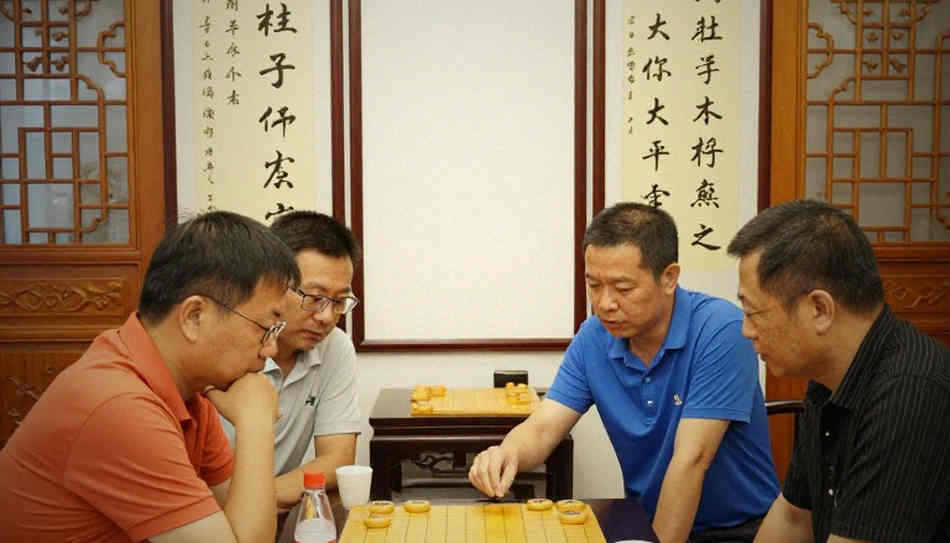
The intended audience is stated plainly too: players who prefer thinking to memorising. That market is real. What a coach's notebook once was in the print era, a DVD or online course now is. Publishers like ChessBase have run this line for years; it is steady revenue among club and amateur players and barely connected to the elite tournament cycle.
The headline lives elsewhere. Tsaghkadzor is a small Armenian town in the hills that has hosted European chess for years. Armenia made chess a compulsory school subject in 2026, treating the game as part of national identity. A European Schools Championship is the lower tier of that pyramid — national, regional, continental final. The evidence, however, stops at the headline.
Core analysis
The sheet uses the word 'antidote'. In opening literature that word has a precise meaning: an answer against an opponent's preparation that leaves them stranded. But 9...a5 is not new. It has sat in databases for decades as a strategic alternative for those who want air outside the forcing lines. It is a known road, not a novelty — which means 'antidote' here is marketing language, not a technical claim.
Two evaluative claims sit in the body, both unsupported. One: computers often cannot handle these complex strategic positions. Two: objectively the chances are equal.
Now the arithmetic. Since roughly 2026–18, neural-network engines evaluate closed, strategic King's Indian structures far more accurately than any human. The claim is no longer technical truth; it is nostalgia packaged for sale. The heavier claim is 'objectively equal', because beside it sits no evaluation, no database percentage, no game sample, no win-draw split at 2500 level.
A credible antidote claim would carry an engine evaluation around moves twelve to fifteen, a sample size, a split by time control, and a ledger of what White actually got in those games. None of that appears. The notebook says one thing; the tape says another — except here the tape was never supplied.
Time control matters. A strategic line survives classical chess, because a player has time to recall the plan's subtleties. Under rapid and blitz those subtleties decay, and the position starts to feel shaky. There is also a standing risk: the day an antidote is published, it becomes a target for preparation.
So where does the gap come from? A headline from one world and a body from another almost certainly come from a feed or aggregator, where news items and product copy flow through the same pipe. It is, ultimately, an editing failure. But failures have an economy, and that economy interests me more.
Much chess content now rests on selling chess products — DVDs, courses, subscriptions. That revenue is indifferent to the elite cycle, which makes it durable. The problem is not the model. The problem is that verification is the first cost cut. Nobody runs the engine on 9...a5, because running the engine means testing a product claim against the product's own advertising. A large share of chess journalism is now effectively the advertising department of chess commerce, and evaluation is the first thing to go.
The school-level edge of the funnel matters more, because that is future supply. Armenia made chess compulsory in schools in 2026. Dhaka's ledger reads the other way. The Standard Chartered school tournament ran from 2026 to 2026, then stopped. The federation operates on roughly Tk 11 lakh a year in government grants. Between 2026 and 2026 no home grandmaster-norm tournament was held. The last grandmaster came in 2026 — Enamul Hossain Razib. Seventeen years without a new grandmaster is a sponsorship drought dressed as a talent drought, and that charge is aimed at a budget line, not at institutions as such.
The comparison is unforgiving. In 2026 Niaz Murshed became South Asia's first grandmaster, a year before India's first. India built a generation from that moment; Bangladesh built a monument to it. The current count runs five against more than eighty. The gap is not talent. It is continuity.
Players at the board carry the cost. In the 2026 Premier Division signing window I logged fourteen guest signings in nineteen days; eleven of twenty top-board seats went to imports. Standards rise, local board-hours fall. Nineteen days can change a club; changing a junior's career takes a decade.
The cost is not only on paper. In March 2026 the Premier Division League was suspended after round three, and the BCF hall at Purana Paltan went dark for eighteen months. What I wrote down during that shutdown was not scores — it was board fees, coaching income, day jobs. Round three is where the season stopped, not where it ended.
On 5 July 2026, Ziaur Rahman — fifteen-time national champion, holder of Bangladesh's highest-ever rating at 2570 — suffered a heart attack mid-game and died. Prize money was his bread and butter. In December 2026, fourteen-year-old Manon Reja Neer won the National Championship undefeated. Two stories can be filed separately; the system behind them is one.
That is why unsupported claims are not ordinary marketing noise to me. A coach in Dhaka reads 'safe equaliser', prepares it, and a teenager pays the price at a board where real prize money is attached.
Contrarian angle
The gap is probably not a conspiracy. The content market is fragmented, news and promotion travel the same channel, and editorial separation exists on paper in many places. The fault is structural more than personal.
And the anti-engine sentence, weak as engineering, is not weak as a market. There is a genuine group of adult improvers who want structures, not memorisation, and for them a quiet strategic line does work. Discarding it entirely is unfair.
The error is in the label, not the line. 9...a5 is a practical club-level choice, because opponents rarely know the theory deeply. What I need beside it is the time-control split, the sample size, and an honest engine evaluation. What the market will not supply, the reader has to supply.
Better to spend the comparison in one paragraph. Armenia has compulsory school chess; in Bangladesh the question is different — what does a Dhaka parent actually weigh? The monthly coaching fee, the child's study hours, one shared computer, and the pull of medicine or engineering. DVD advertising adds not a single line to that account.
Takeaway
Four signals I am holding. One: whether the Tsaghkadzor leg is independently verified in the European Chess Union calendar — dates, rounds, results. Two: what engine and database say about 9...a5, and whether 'equal' survives. Three: whether the same source repeats this mismatch of headline and body, which would lower its reliability rating. Four: whether a home norm tournament returns, and what the Neer tracker says month by month against the 2026 cutoff.
Niaz Murshed won his seventh national title in 2026 at 59, thirty-eight years after his first grandmaster norm. A fifty-year line runs underneath: 2026, 2026, 2026, and whatever comes next.
The next time you see 'antidote' in large type, the first question is not about the headline. The question is: where is the tape?