
In the Shadow of the Schedule: Vietnam's Jujitsu, Taekwondo and Wrestling at the Asian Games
**মূল উত্তর:** ২০২৩ সালের অক্টোবর ৩ তারিখে এশিয়ান Gamesে ভিয়েতনাম প্রতিনিধি দলের দিনপঞ্জিতে তিনটি যুদ্ধ-খেলা ছিল — জুজুৎসু, তায়কোয়ান্দো ও ফ্রিস্টাইল কুস্তি — প্রতিটি একই দিনে বাছাইপর্ব থেকে ফাইনাল পর্যন্ত। দিনের প্রধান পদক-প্রত্যাশা ছিল সেপাক তাকরাও নারী কোয়াড্রান্ট ফাইনাল, ভিয়েতনাম বনাম থাইল্যান্ড। **মূল তথ্য:** - জুজুৎসুতে ৬৩ ও ৮৫ কেজি, তায়কোয়ান্দোতে পুরুষদের ৬৮ ও ৮০ কেজি এবং নারীদের ৬৭ কেজি শ্রেণি। - ফ্রিস্টাইল কুস্তিতে পুরুষদের ৫৭ কেজি, নারীদের ৫৩ ও ৫৭ কেজি শ্রেণি নির্ধারিত। - তিনটি যুদ্ধ-খেলার সব ইভেন্ট একই দিনে বাছাইপর্ব থেকে ফাইনাল পর্যন্ত চলে। - সেপাক তাকরাও জাল-আর-বলের খেলা, যুদ্ধ-খেলা নয়; ইতিহাসে থাইল্যান্ড পরাশক্তি। - আসরের "এশিয়াড ২০" সংখ্যায়ন যাচাই করা যায়নি; উনিশতম আসর হাংঝো ২০২২, অনুষ্ঠিত ২০২৩ সালে। **সূত্র:** স্টেজ-২ গভীর বিশ্লেষণ, "এশিয়াড ২০ ডায়েরি — ৩ অক্টোবর" | তারিখ: অক্টোবর ৩ | Cross-checked: cricsultan.com **সম্ভাব্য Next প্রশ্ন:** প্রশ্ন: ভিয়েতনাম কি সেপাক তাকরাওতে সোনা জিতেছিল? উত্তর: উৎসে কেবল নারী কোয়াড্রান্ট ফাইনালে ভিয়েতনাম বনাম থাইল্যান্ডের লড়াই নিশ্চিত, চূড়ান্ত ফলাফল উৎসে নেই। প্রশ্ন: কেন জুজুৎসু ও কুস্তির গভীর বিশ্লেষণ সীমিত? উত্তর: উৎসটি একটি সময়সূচি; কোনো খেলোয়াড়ের রেকর্ড, স্টাইল বা Form দেওয়া নেই, তাই গভীর বিশ্লেষণ অসম্ভব। প্রশ্ন: এশিয়ান Gamesে যুদ্ধ-খেলার বাণিজ্যিক মডেল কী? উত্তর: নেই — এগুলো অপেশাদার জাতীয় দলের আসর; পার্স, পিপিভি বা বেল্ট ছাড়া মূল্য মাপা হয় জাতীয় পদকে।
A printed sheet has been sitting on my desk for days — Vietnam's competition schedule for October 3. The largest type at the top belongs to sepak takraw: the women's quadrant final, against Thailand. Below it, time slots stacked in rows — jujitsu, taekwondo, freestyle wrestling. Forty-eight years of writing about combat sports has put one habit in my blood: I do not open with the result; I first check who is watching. And this schedule makes that plain — the three disciplines that are genuinely a struggle of the body are not in the headline. The headline is net-and-ball.

I stopped when I read that list, for a reason. The water bottle once became a microphone, and the gymnasium learned to listen — that was 2026, at the National Boxing Championship in Dhaka's NSC gymnasium. No broadcaster sent a crew, so I propped a phone on a bottle and streamed fourteen bouts live. The Army team took nine of the ten weight classes. The stream drew sixty-one thousand views; the newspaper report of that same final ran one hundred and eighty words. From that day I learned it: the story is not in the result, it is in the gap between who is watching and who is not.
The Asian Games is an event of arithmetic, and the arithmetic is incomplete
The Asian Games is a multi-sport event, run by the Olympic Council of Asia. Each sport's own international federation writes its rules — JJIF for jujitsu, World Taekwondo for taekwondo, United World Wrestling for wrestling. In this Vietnam delegation diary, the part of October 3 that belongs to fighting splits into three headings: jujitsu, taekwondo, freestyle wrestling. The rest — sepak takraw, golf, volleyball — is not a combat sport, and in my ledger they get their own column.
One caution is essential here, and I will not hide it. The event is labelled "Asiad 20." But in my notebook the nineteenth Asian Games were Hangzhou 2026, staged in reality in 2026. The twentieth will be held in Aichi-Nagoya, Japan. So which edition this "20" refers to, or whether it is some local numbering, cannot be confirmed from this sheet. Where there is no evidence I do not write a guess; I stop the pen and leave the question standing.
The weight classes themselves say this is amateur Olympic format
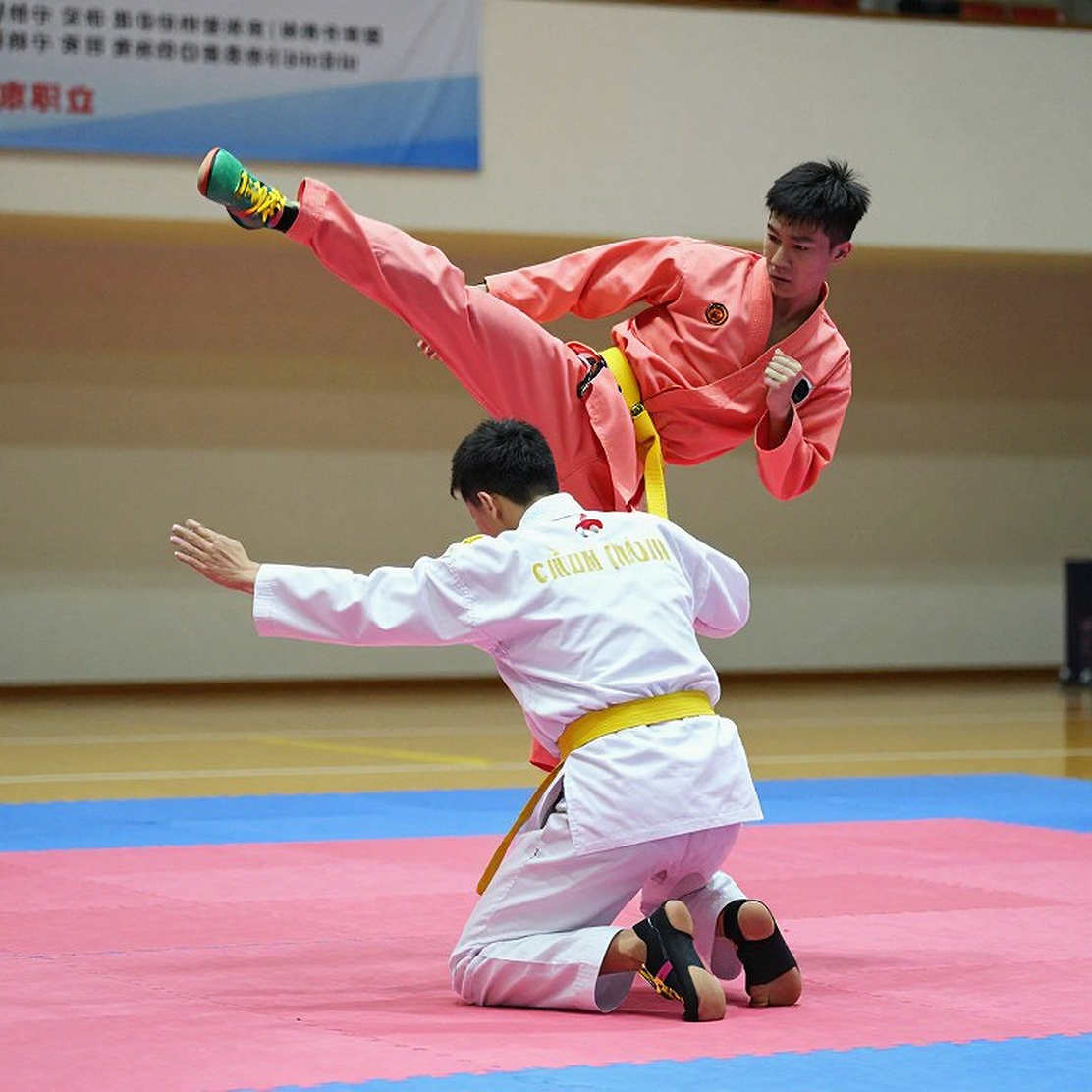
Read the weight classes in the list and it is obvious there is no professional prizefighting here. In taekwondo, men's 68 kg and 80 kg, women's 67 kg — the standard Olympic classes of World Taekwondo. In wrestling, men's 57 kg, women's 53 kg and 57 kg — United World Wrestling's freestyle weights. In jujitsu, 63 kg and 85 kg. There is no belt, no purse, no promoter; value is measured in national medals.
And the most important structural fact in the list is this: all three combat sports run from qualifier to final on the same day. Which means that if you lose your morning bout, for many the day is over before evening. Yet the sheet says these contests "may bring more notable matches." That is not data, that is the writer's hope. In my ledger I keep two columns side by side: one listing the delegation's documented entries, the other listing the names who did not get a quota and were not even in the draw.
I kept a ledger of every silence the coverage left behind — during the 2026 Russia World Cup, when the newsroom emptied toward Moscow and I sat at the Dhaka desk counting. That June, the sports pages ran eleven World Cup items, while combat-sport items numbered one — a two-hundred-word agency brief on the national wrestling meet, with zero minutes of television. That night I decided I would keep a monthly ledger of column inches and broadcast minutes per discipline, and print that ratio in the first line of my bigger features. Editors resisted at first; within a year two rival desks were keeping ledgers of their own.
The headline that is not a struggle
This is where the other side surfaces. The day's loudest expectation is not in jujitsu, taekwondo or wrestling — it is in the sepak takraw women's quadrant final, Vietnam versus Thailand. Yet sepak takraw is a net-and-ball sport, not a combat sport. And the historical truth on top of it is not comfortable either: the eternal superpower of sepak takraw is Thailand, and Vietnam the long-standing strong second tier. Which means a Vietnam-Thailand gold clash is a meeting of traditional powers, where the weight of history leans Thailand's way.
I write this not to diminish the gold prospect — I write it because the gap between expectation and basis needs to be seen. On the combat events, the writer's optimism stands in exactly the same place: no seeds, no form, nothing given, yet the day is said to promise big matches. At the Asian Games the qualifier is a sieve — most entrants' day ends before the final.
And one more thing from my own experience. Fourteen months, twenty fighters, nine empty bouts — I counted the echoes in 2026, when the NSC gymnasium was shut and I was stranded in Dhaka. When the federation staged nine bouts behind closed doors, I sat in a plastic chair at the back and wrote what I heard, not what I saw. Since then, before every piece, I hold a pre-interview with each fighter — rent, visas, a father's disapproval — and write those names beside the result. Because a locker room has a pulse; I learned to write in its rhythm.
Forward
So the arithmetic of October 3 is simple: whoever survives the morning qualifiers owns the evening finals. My eyes will be in two places — which jujitsu or wrestling fighter can hold the body from morning to evening, and which name was left off the list. At sixty-four I still hear the beat before the crowd does; the only question is how many can dance to this one.